Open source
Biomolecular AI at
a fifth of the cost
TT-Bio runs the leading structure prediction, design and affinity models on Tenstorrent hardware. On OpenFold3 and Boltz-2, one Blackhole Galaxy has higher throughput than an NVIDIA DGX B200, for under a third of the price.
Benchmarks
Throughput, every model, every system
Predictions per hour on the same 512-residue protein, each stack on its own shipped settings, then divided by what the hardware costs.
The GPUs run Anthropic's open kit for these models in exact mode where it has the model, and the authors' own release where it does not. Methods
Galaxy BlackholeNVIDIA, Anthropic kitNVIDIA, upstream
Why it costs less
These models want many small processors, not a few huge GPUs
Small models, many small processors
A biomolecular model is 2 to 3 GB of weights, about 1 % of a B200's memory, so one prediction leaves most of a big GPU idle. A Galaxy gives every prediction its own processor: 32 run at once.
Compute-bound, so no HBM
The pairformer does N³ work on N² data: about 676 calculations per byte at 512 residues, past the point where any GPU waits on memory. Blackhole pairs GDDR6 with large on-chip SRAM instead of HBM.
Off the HBM allocation
The memory makers report their 2026 HBM output sold out. Blackhole does not use it, so you can actually buy it.
Inference and training
The same stack trains OpenFold3-family models, on the same hardware.
Coverage
Every model, one codebase
Every model runs on the same stack, from the kernels on the chip to the serving layer. Speed up one part and every model gains.
Structure prediction
Training
Binder design
Binding affinity
Embeddings
Accuracy
The same answer as the reference
Every release checks each model against its official reference implementation, run the way people use it: with an MSA wherever the model takes one.
The bar moves, so we measure it
A single reference run is not a target. The reference itself varies between seeds, so we measure that spread and land inside it.
Checked three ways
Submodule activations by correlation, end-to-end outputs on identical noise, and published benchmarks reproduced.
Every release, every model
A release ships when every model's checks pass. Per-target results, thresholds and reproduction commands are in the repository.
Try it on real targets, free
JapanFold runs TT-Bio on Tenstorrent Galaxy servers as a public service. Fold, design or score from the browser, the API or your AI agent.
Contact
Talk to the people who build TT-Bio
Bringing these models onto your own hardware, need one TT-Bio does not run yet, or want to train on your own data? Tell us what you are working on, and we will reply by email.
To run the models without hardware, use JapanFold. For a bug, open an issue.
That did not go through. Your browser's back button still has your message: check it and send it again.
Sent, thank you.
We will reply to the address you gave.
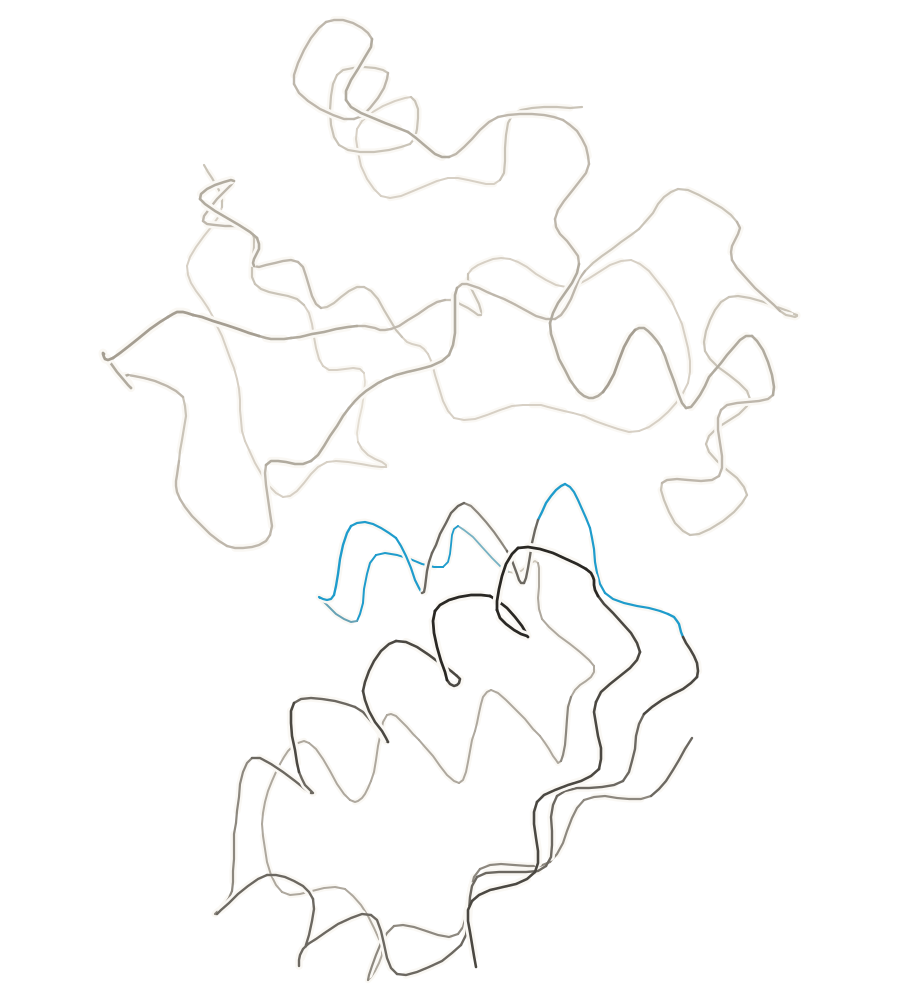
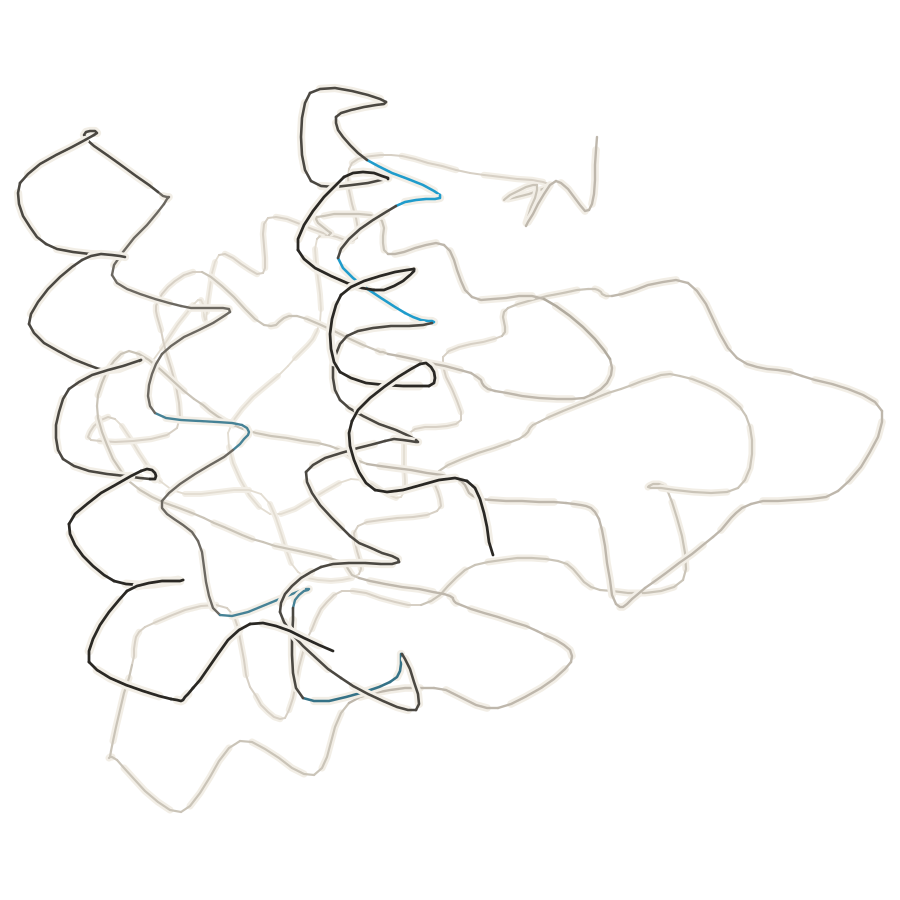
Tenstorrent, Blackhole and Galaxy are trademarks of Tenstorrent Inc. NVIDIA, DGX, H200, B200 and A100 are trademarks of NVIDIA Corporation. Hardware names are used to identify the systems measured. Line drawings: barstar bound to barnase (PDB 1BRS) and a BindCraft 2 binder on PD-L1 designed on Tenstorrent, drawn from their C-alpha traces.